

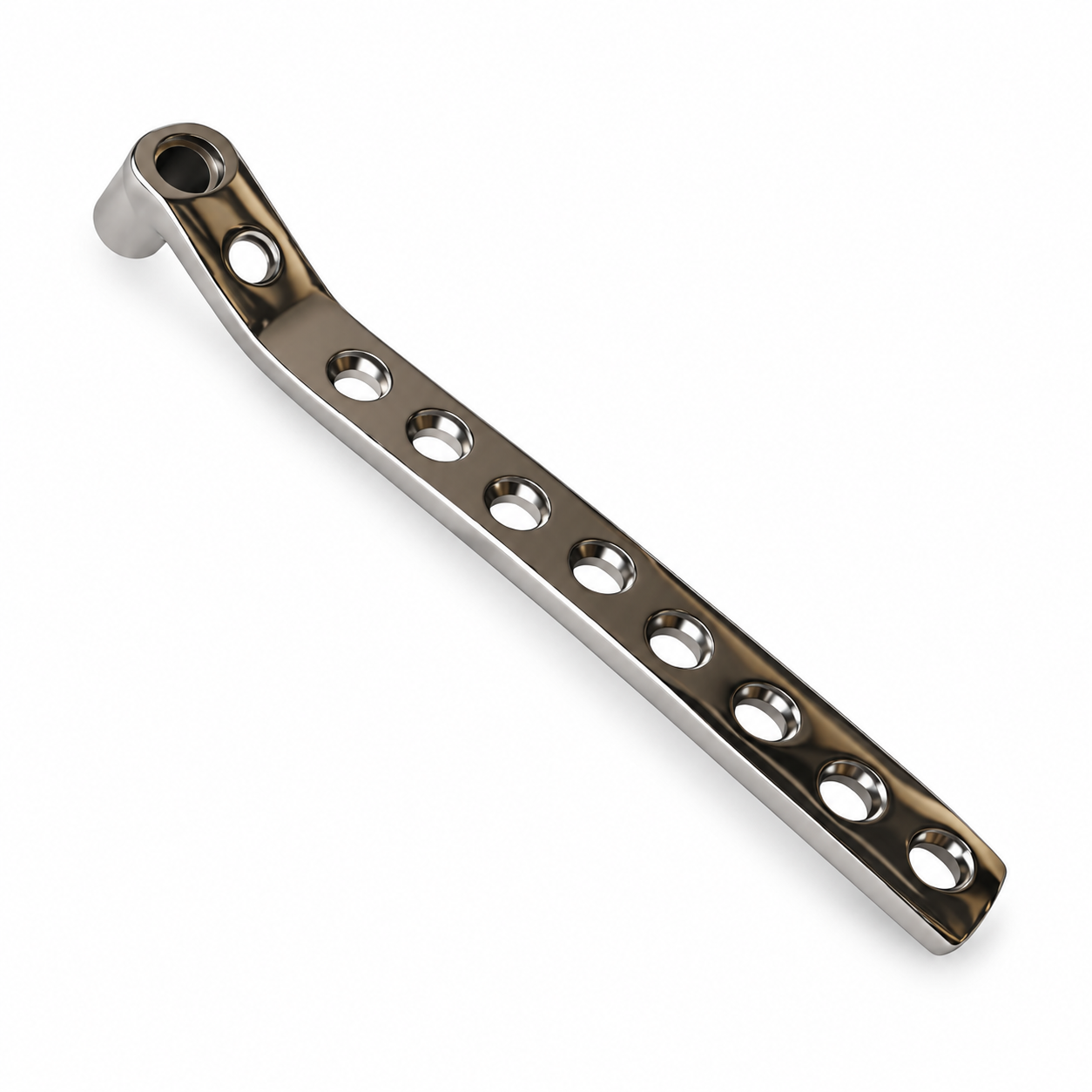


The Angled Orthopedic Bone Fixation Plate is a specialized internal fixation implant designed to provide mechanical support and maintain bone alignment during selected orthopedic fracture management procedures. Its distinctive construction combines an elongated shaft with multiple fixation openings and an angled proximal section featuring a larger circular opening.
Orthopedic fracture fixation requires implants that provide sufficient mechanical stability while accommodating the anatomical characteristics of the affected bone. Angled bone plates are developed for specific fixation applications where conventional straight plates may not provide the required positioning or fixation geometry.
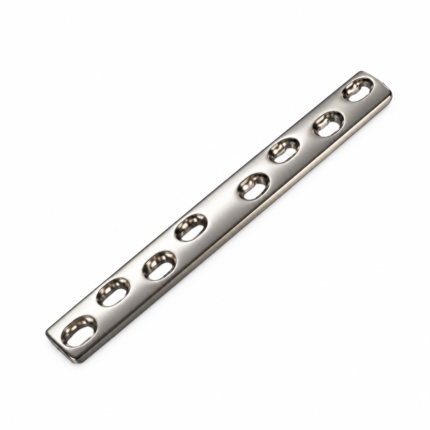
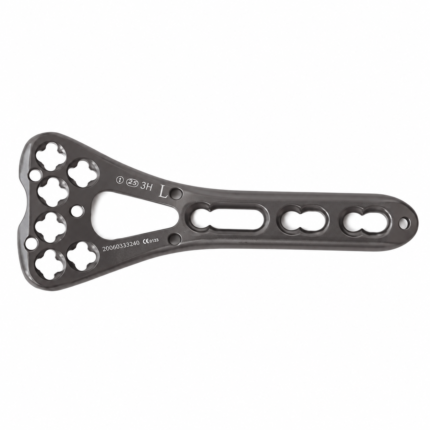
This orthopedic implant features a polished metallic surface, smooth rounded edges, and a long shaft with a series of recessed screw openings. The raised section at one end introduces a change in plate geometry that may facilitate specialized fixation when matched with the appropriate anatomical region and surgical technique.
The design is intended for use with manufacturer-approved fixation screws and instruments in validated orthopedic plating systems.
Key Features of the Angled Orthopedic Bone Plate
1. Angled Proximal Design
The plate incorporates a raised, angled section at one end, distinguishing it from conventional straight bone fixation plates. This geometry may provide specialized positioning or fixation options depending on the approved anatomical application.
2. Multi-Hole Fixation Shaft
The elongated shaft features multiple circular fixation openings arranged along its length. These openings provide several potential screw placement points for constructing a stable plate-and-screw fixation system.
3. Prominent Proximal Opening
The proximal end features a larger circular opening surrounded by an elevated metallic structure. Its exact function depends on the manufacturer’s design and compatible fixation components.
4. Recessed Screw Holes
The shaft contains precisely shaped recessed openings intended to accommodate compatible orthopedic screw heads.
5. Smooth Metallic Surface
The polished silver-colored finish gives the implant a refined appearance, with smooth transitions around the fixation openings and external edges.
6. Contoured Plate Profile
The plate transitions from an angled proximal section into a relatively straight longitudinal shaft. This distinctive configuration is intended for specialized orthopedic applications.
7. Rounded Distal End
The opposite end of the plate features a rounded profile and terminal fixation opening, providing a compact structural finish.
Orthopedic Applications
The Angled Orthopedic Bone Fixation Plate is intended for consideration in orthopedic internal fixation systems where a plate with an angled end is specifically indicated.
Depending on the implant’s verified specifications and approved indications, comparable designs may be used for:
-
Internal fixation of selected bone fractures.
-
Stabilization of bone fragments following fracture reduction.
-
Maintenance of anatomical alignment during bone healing.
-
Selected reconstructive orthopedic procedures.
-
Fixation following certain corrective osteotomies.
-
Specialized trauma procedures requiring an angled fixation construct.
-
Orthopedic applications requiring multiple shaft fixation points.
The exact anatomical location cannot be established from the product image alone. Its suitability for femoral, tibial, or other bone fixation must be confirmed through manufacturer documentation.
Angled Design and Fixation Performance
The angled proximal configuration is one of the defining features of this orthopedic plate.
Unlike conventional straight plates, which generally follow a single longitudinal axis, angled plates incorporate a change in geometry near one end.
This structural arrangement may allow the implant to accommodate particular bone contours or specialized fixation components, depending on its intended use.
The elongated shaft provides additional fixation positions along the bone, while the proximal section contributes to the overall geometry of the fixation construct.
The mechanical performance of the plate depends on its material properties, dimensions, approved screw system, and surgical application.
Multiple Screw Fixation Points
The shaft contains a series of recessed holes intended for attachment with compatible orthopedic screws.
Multiple fixation openings provide surgeons with potential options for selecting screw locations based on fracture geometry, available bone stock, and the implant’s surgical technique.
Appropriate screw placement is essential for achieving the intended mechanical stability of the fixation construct.
The number of screws used in a particular procedure should be determined according to the fracture pattern, implant design, and clinical judgment.
The visible recessed openings do not independently establish whether the plate incorporates locking or dynamic compression technology. These features must be verified from the manufacturer’s specifications.
Support for Bone Alignment and Stabilization
Following fracture reduction, internal fixation implants are used to maintain the position of bone fragments and resist unwanted displacement.
An appropriately selected plate-and-screw system may provide mechanical support during the healing process.
The stability of fracture fixation depends on several factors, including:
-
Fracture type and anatomical location.
-
Bone density and quality.
-
Plate dimensions and mechanical properties.
-
Screw type and insertion technique.
-
Implant positioning and alignment.
-
Mechanical forces acting on the bone during recovery.
The Angled Orthopedic Bone Fixation Plate is intended to function as part of a complete fixation system rather than as an independent implant.
Material and Surface Characteristics
The pictured implant has a polished silver-colored metallic finish.
Medical-grade stainless steel and titanium alloys are commonly used in orthopedic fixation implants when their mechanical properties and biological safety are suitable for the intended application.
Stainless steel orthopedic implants may offer favorable mechanical strength and corrosion resistance when manufactured using appropriately specified implant-grade alloys.
However, the silver appearance alone does not establish the material composition of this particular plate.
The manufacturer should confirm the base material, alloy grade, surface finishing process, and relevant regulatory documentation.
Technical Specifications
| Specification | Product Details |
|---|---|
| Product Name | Angled Orthopedic Bone Fixation Plate |
| Product Category | Orthopedic Implants |
| Product Type | Angled Fracture Fixation Plate |
| Plate Design | Angled proximal section with elongated shaft |
| Hole Configuration | Multiple recessed circular openings |
| Color | Silver Metallic |
| Material | Manufacturer confirmation required |
| Surface Finish | Polished metallic appearance |
| Proximal Design | Raised circular opening |
| Shaft Profile | Elongated and contoured |
| Fixation Method | Compatible orthopedic screws |
| Screw Compatibility | According to manufacturer |
| Application | Internal orthopedic fracture fixation |
| Available Dimensions | To be confirmed |
| Sterilization | As specified by manufacturer |
| Intended Users | Qualified orthopedic surgeons |
Benefits of the Angled Bone Fixation Plate
Specialized Fixation Geometry
The angled proximal section provides a distinctive configuration for approved orthopedic applications requiring a non-straight implant design.
Multiple Fixation Positions
The longitudinal shaft incorporates several potential screw placement locations for attachment to the bone.
Support for Fracture Alignment
When correctly selected and applied, an appropriate plate-and-screw construct helps maintain fracture reduction during bone healing.
Smooth External Contours
The rounded ends and polished-looking surface provide a refined profile intended for professional surgical applications.
Compatibility-Based Implant Design
The plate can be incorporated into a specialized orthopedic fixation system when used with the designated screws and instruments.
Longitudinal Stabilization
The elongated shaft provides multiple anchoring positions along the affected bone segment.
Precision Manufacturing and Quality Control
Orthopedic bone fixation plates require controlled manufacturing processes to achieve consistent dimensional accuracy and mechanical performance.
Important quality considerations include precision machining, screw-hole geometry, surface finishing, material verification, and mechanical testing.
The manufacturer should also document appropriate biocompatibility assessments, corrosion testing, implant traceability, and sterilization requirements.
Compatibility with the designated screws and instruments should be established through the implant manufacturer’s technical documentation.
Applicable manufacturing standards and regulatory requirements depend on the intended market and medical device classification.
Why Choose the Angled Orthopedic Bone Fixation Plate?
The Angled Orthopedic Bone Fixation Plate offers a distinctive structural configuration that combines a raised proximal opening with an elongated multi-hole shaft.
Its design provides several potential screw placement positions and a specialized angled profile.
For orthopedic implant distributors, medical equipment suppliers, and surgical procurement departments, this type of plate may be a relevant addition to an orthopedic trauma fixation product portfolio once its technical specifications and regulatory status have been verified.



Reviews
There are no reviews yet.