

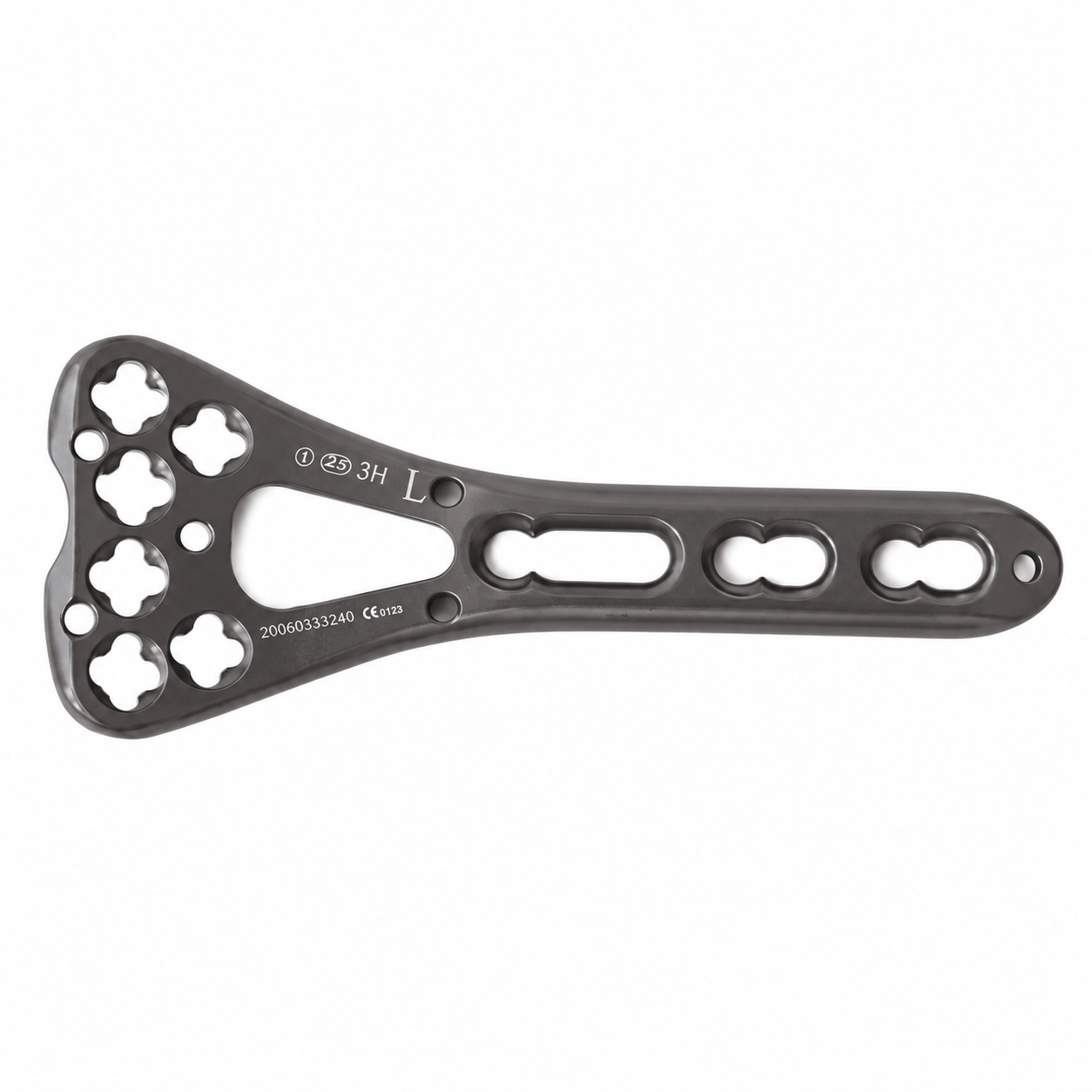
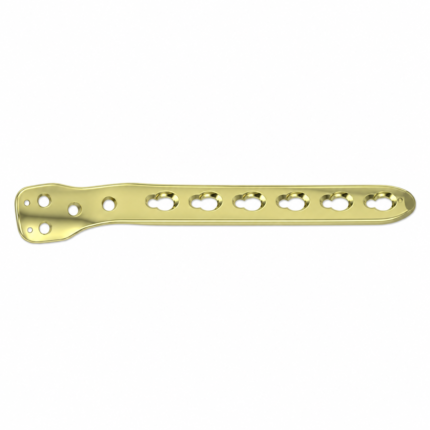
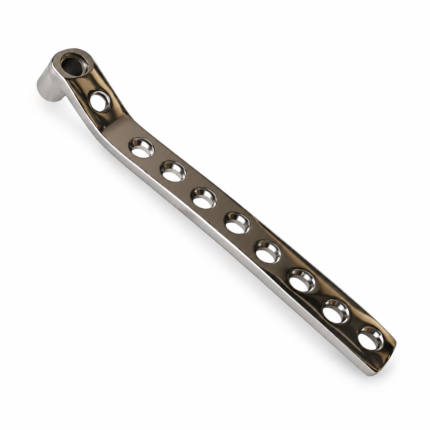
The 3H L Anatomical Locking Bone Plate is a specialized orthopedic implant featuring an anatomically contoured design intended for internal bone fixation. Its distinctive structure combines a widened fixation head, multiple contoured screw holes, and an elongated shaft to accommodate different fixation requirements during orthopedic procedures.
Designed with attention to structural geometry and surgical handling, this bone plate provides a potential fixation solution where anatomical alignment and mechanical stability are important.
The plate features a dark metallic surface, smooth contours, and precision-shaped openings. The visible “3H” and “L” markings help distinguish its configuration, although the exact anatomical indication, implant material, and fixation system must be confirmed using the manufacturer’s technical documentation.
Anatomically Contoured Design
One of the key characteristics of the 3H L Anatomical Locking Bone Plate is its specialized profile.
The implant features a broader head section connected to a narrower, elongated shaft. This geometry is intended to support fixation across different regions of a bone, depending on the implant’s approved anatomical application.
Key design features include:
-
Anatomically shaped plate profile.
-
Widened head section with multiple fixation openings.
-
Elongated shaft with contoured screw slots.
-
Smooth, rounded external edges.
-
Multiple potential screw placement positions.
-
Clearly identifiable orientation markings.
Its contoured shape is designed to accommodate particular anatomical fixation requirements while supporting surgical placement.
Medical-Grade Material and Construction
Orthopedic fixation plates are commonly manufactured from medical-grade titanium alloys or surgical stainless steel.
These materials are used in orthopedic implants because appropriate certified grades can provide mechanical strength, corrosion resistance, and biocompatibility.
The actual material grade of this product should be verified before listing or clinical use.
Depending on the verified manufacturing specification, relevant material properties may include:
-
Resistance to mechanical loading.
-
Corrosion resistance in physiological environments.
-
Biocompatibility for implant applications.
-
Dimensional consistency.
-
Compatibility with validated cleaning and sterilization procedures.
Material selection, surface treatment, and quality testing must comply with the regulations and standards applicable to the intended medical device.
Multiple Screw Hole Configuration
The plate incorporates several differently shaped openings across its head and shaft.
The wider section includes multiple contoured holes, while the elongated portion features combination-style openings.
This design may accommodate different screw placement options depending on the approved fixation system.
Widened Head Section
The plate head is characterized by several arranged screw holes intended to provide fixation opportunities within the corresponding bone region.
Its expanded geometry supports the positioning of multiple screws where clinically appropriate.
Elongated Shaft Section
The shaft contains multiple elongated and rounded openings.
Depending on the manufacturer’s approved design, these openings may serve specific fixation functions, including screw positioning or compression.
Important: Locking capability and compatible screw types cannot be established from appearance alone. They must be confirmed from the manufacturer’s specifications.
Smooth Surface and Precision Engineering
The implant features a smooth metallic appearance with contoured external surfaces and rounded transitions.
For orthopedic implant manufacturing, dimensional precision is important because small differences in screw-hole geometry can affect compatibility and mechanical performance.
Manufacturing requirements may include:
-
Precision machining of fixation openings.
-
Controlled plate thickness.
-
Consistent hole geometry.
-
Smooth edge finishing.
-
Surface quality inspection.
-
Dimensional verification.
-
Batch identification and traceability.
These processes should be supported by appropriate manufacturing controls and documented quality inspections.
Designed for Orthopedic Fracture Fixation
Internal fixation plates are used in orthopedic surgery to stabilize selected fractures and assist in maintaining bone alignment during healing.
The appropriate use of this particular plate depends on its verified anatomical indication, compatible screws, available sizes, and approved surgical technique.
Potential orthopedic fixation considerations include fracture configuration, bone quality, anatomical alignment, and the mechanical demands on the implant.
Implant selection and placement must be performed by appropriately qualified orthopedic professionals using the manufacturer’s instructions for use.
Orientation and Identification Markings
The visible plate includes a “3H” marking and the letter “L.”
These markings may help identify the implant configuration and left-sided orientation.
Additional engraved characters are also visible on the product surface.
Accurate identification markings are important for implant traceability, inventory management, and surgical product documentation.
The interpretation of all product markings should be verified against the manufacturer’s catalog.
Manufacturing Quality and Inspection
Orthopedic implants require strict quality management because they are intended for use in medical procedures.
Manufacturers should maintain documented processes for material verification, production inspection, final quality control, and product traceability.
Relevant manufacturing and regulatory considerations may include:
-
ISO 13485 medical device quality management.
-
ISO 10993 biological evaluation, where applicable.
-
Material-specific implant standards.
-
Relevant orthopedic implant mechanical testing.
-
Product labeling and traceability requirements.
-
Applicable national medical device regulations.
Compliance with these standards should be claimed only when supported by valid documentation.
OEM and Private Label Manufacturing
The 3H L Anatomical Locking Bone Plate may be offered through OEM orthopedic implant manufacturing services, subject to appropriate design controls and regulatory requirements.
Potential OEM services include product identification, traceability marking, approved packaging configurations, and manufacturing documentation.
Any changes to implant dimensions, surface finish, hole geometry, or material require proper engineering verification and applicable regulatory assessment.
Professional Medical Applications
This type of orthopedic fixation product is intended for specialized professional medical settings.
Potential supply channels include orthopedic implant manufacturers, authorized medical device distributors, hospitals, and specialist surgical instrument suppliers.
Before procurement, buyers should verify the exact product reference, available plate lengths, screw compatibility, material certification, sterilization status, and regulatory authorization in the intended market.
Conclusion
The 3H L Anatomical Locking Bone Plate features a distinctive contoured profile, multiple screw openings, an elongated shaft, and visible orientation markings.
Its design reflects the structural characteristics of an orthopedic internal fixation plate intended for specialized bone stabilization applications.
With verified material specifications, fixation compatibility, manufacturing documentation, and regulatory authorization, the product can be accurately presented in an orthopedic implant catalog for professional medical buyers.





Reviews
There are no reviews yet.